This Orange Bowl drama was off the field

Topeka Daily Capital
January 1963

WASHINGTON – This man and his wife came home at 3:30 a.m. from the New Year’s Eve revelry. They had wound up at the Statler Hilton and, as the saying goes, the Hilton was ‘tiltin when they left.

At home, the babysitter was awfully excited. “The White House has been calling,” she said. She gave the name of the man who was calling.

The call was returned. The man had been calling through the White House switchboard. Actually, he was at home.

“The courier plane is flying to Palm Beach at 8:00 a.m. today, “And a bunch of us have decided to ride it and go to the Orange Bowl game. We can just make it.

“You and your wife are invited,” he continued. “The main reason you’re invited,” he added with a sort of nervous chuckle, “is that we we figure you’re the man who can get tickets for us.”

The man listening flinched. It was something like eight hours before the kickoff, and the game was reported as a sellout.

“How many tickets?” he asked.

“Twelve, counting two for you.”

“I’ll try for 10,” said the man, “considering the takeoff is in something like four hours and we’re not exactly prepared to go.”

The man tried. He called Ken Ferris, Oklahoma’s business manager, at a Miami Beach Hotel. It was now about 4:00 a.m.

“What’s wrong?” Ferris asked anxiously.

“Nothing much, said the man, “except that I need 10 tickets.””

“I can get you 10 for our opener next season at Southern Cal,” said Ferris. “I can even get you 10 for the Texas game. What game do you mean? I know you wouldn’t call me at 4:00 a.m. and ask for 10 for today’s game.”

“Today’s game,” said the man, “is what I have in mind.”

It was fortunate at that time that Ferris is a deacon in his church, and a man not given to anger or swearing. He said he’d try, and that the party of 10 should call at the outside door of the Oklahoma dressing room no later than 11:30 AM. That meant he’d have the tickets.

The man called back to the White House caller. Then he went to sleep and barely made it to the TV set next day to see the game from there. Two weeks later, he saw Ferris. He smiled, but Ferris didn’t.

“That guy never picked up those tickets,” Ferris said. “Nobody ever showed up. We got stuck with $65 worth of tickets.”

It was another two weeks before the mystery cleared. It seems the president visited the Oklahoma dressing room at about 11:30, and that local policemen had that area blocked. Nobody – absolutely – except the president’s party could get near the dressing room door.

“It was sort of a mess,” said the man who was to pick up the tickets. “The local police wouldn’t let us near the place, and you can’t blame them.” they got in, but that’s another story. . . .

(Editor’s Note – January 1, 1963: Alabama defeated Oklahoma 17-0 in the Orange Bowl. In the game attended by President John F. Kennedy, the Crimson Tide were led by sophomore quarterback Joe Namath.)

Inkstained wretches on the road

Topeka Daily Capital
Oct.14, 1959

Football weekend…

We met at the airport and Charlie Howes rolled his new Comanche out of the hangar. While he was closing the hangar doors, he turned and saw Frenn working on the fuselage with his fingernail file.

“What are you doing?” Charlie asked. “Seeing if I can find any loose bolts to tighten.” He looked up then to the radio antenna, a single wire stretching from the cabin to the tail section. “What’s that?” he asked.

“That,” said Charlie, “holds the tail on. Get in.”

Frenn and Pritchard got in the back seat, and we were off the ground before three o’clock. A little after five, Charlie was calling Dallas Approach Control on the radio and the man on the other end warned, “Traffic is extremely heavy.”

Frenn looked up from the gin game long enough to tell Charlie, “You heard what the man said.” Charlie replied: “I’ve got on my light fall suit, in case we hit anything.”

Frenn paled. . . .

Continue reading

A Last Deadline on Borrowed Time

The Metro News
Oct. 8, 2004

It was about two years ago, as I recall, that a doctor told me I was receiving too much medical attention. The way he put it was that I was being “over-doctored.”

This judgment came during a serious diagnostic session after I was referred to him, I suppose, by one of the doctors who were over-doctoring me. There had been some CAT scans, and both the doctors ordered ordering them and the doctor analyzing them had their names on some of the paperwork.

The session wasn’t all that serious. In the course of it, the doctor got out of his chair and showed me how a mutual friend of ours tries to hit a golf ball. During this demonstration, he had both feet off the floor at the same time, and I’d say the whole show called for a considerable amount of agility.

As I left, his final words were, “stay away from too many doctors. You’ll be OK.”

Moving closer ahead, to April of this year, the same doctor, serious to the hilt, told me I didn’t have long to live. “We’re talking months, not years,” was the way he put it.

I had developed a mild, but persistent, pain in my midsection, and this led to tests, which led to a referral back to the golf doctor. He looked me over and said he’d better have a closer look at the tests. He said he’d call me.

The call came on a Friday, ruining my weekend. Did it ever. He said he wanted to see me the following Tuesday, and to quote, “bring Barbara.” When a doctor tells you to bring your wife with you, it sounds exactly like dirt hitting the lid of your coffin.

The doctor’s sense of humor, and his ability to maybe hit a golf ball with both feet off the ground didn’t make the bad news any easier to take. I felt sudden compassion for horse thieves and occupants of death row, when I should have been thinking about what was ahead for me.

There was the biopsy, which is like having your appeal rejected. There was the last hope, the surgeon, who was confident he could operate and remove all the cancer, But it was a gamble that failed. The tumor had spread beyond control, to my magneto and onto my push rods and even to my differential. As I once heard an Okie explain it, “I was ate up with cancer.”

The operation was supposed to take four hours, but when I woke up in the recovery room just two hours after the starting time, I knew the game was over.

I was in the hospital, recovering from an artistic incision when the oncologist talked to me and my family about available treatments to slow the cancer and possibly add some quality time, as it’s called, to my life. They all agreed with my decision not to pursue that option.

My personal feeling was that I figured I’ll be closing in on my 84th birthday when my time comes, and that’s enough. I didn’t feel like gambling on paying out quality time to buy more quality time, with no guarantees.

I got out of the hospital and went home to recuperate. This process got a big boost when my children, deciding there would be no immediate division of the assets, also went home. It wasn’t long, however, before we were all back together.

In mid-June there was a countrywide Snider reunion in Oklahoma City, and to everyone’s surprise, mostly mine, It turned out to be very enjoyable. Everyone brought old pictures and newspaper clippings, and it took us three days to digest it all and visit cemeteries and other historical sites the Sniders made famous.

Barbara and I then spent the rest of June, all of July and the first week of August freeloading with daughter Amy and her family in Southlake, Texas. It was a long time, but it gave me the opportunity to learn again to appreciate the taste and fragrance of a good cigar and a touch of schnapps. It all works better in a lounge chair beside the pool.

In August our family and a few friends got together in Litchfield Beach, SC for our kind of revival., and to eat crab cakes. We were forced to evacuate by Hurricane Charlie, but only for one night, when we had to eat ribs.

We’re back in Topeka now, and I saw the oncologist Monday. He didn’t have any good news for me, and he wouldn’t risk the prognosis on how long I have to live. He said I could go where I want to go and do what I want to do, but that’s like saying that if that if I’ve never been to Cleveland, and always have wanted to go, now is the time. The same goes for Beaumont and Bozeman. But not Britton, where I grew up.

I won’t be writing forever, although you may be thinking I’m acting like I’m going to try. What is going to happen is that on days I don’t feel up to it, the staff of the Metro News will select columns to rerun. You’ll probably enjoy them more than the new stuff, right off the showroom floor.

I’d be lying if I told you I never think about the end, both when and where. I always wind up with my dad, and the night he died, in a nursing home. The family was there, and as it got very late, he told us to go home, saying, “I’m not in any pain, and I’m not afraid, so go home.” We left, and he died about two hours later.

I also think of my mother. She, too, died in nursing home, talking like she was a teenager again, teaching at a one- room school in western Oklahoma.

I also remember the night she and my brother took me to the airport to catch a late flight, and it was stormy, with lightning. She mentioned the weather, and I said it was OK, that if the plane crashed, my troubles would be over. And she said, “Or just beginning.”

I thought about that. Am I ready to go? All I know is that Father John Rossiter has punched my pearly gate ticket, but he can’t guarantee the reservation. He can’t tell me if I’m going first class, or even when my bus (?) leaves. So far, I have no reason to believe my departure will be like the movies, where Spencer Tracy will appear suddenly at my side, and tell me it’s time to go.

When that time comes, I can feel good about some things. Our children are doing well, and their mother, the best thing that ever happened to them, still will be around to help them for many years to come. Our grandchildren all show signs of learning to read and write, and they know their Grandma Snider will be here to do everything grandmas are supposed to do, and then some.

On the wall across from my typewriter hangs a rarity. It is an old-fashioned calendar from the First National Bank of Harveyville, and my wife’s family, and now our family, have been picking them up and hanging them for years.

They’ve served as a reminder to me that I am basically a small-town guy, and I’m at my best when I don’t forget that much of what I learned about life, and how to live it, with small town stuff.

Here’s an example: one day at a Snider’s summer outing, we were playing golf, and my grandson Will was piloting our cart. He was a terrible driver, so I had him stop, and told him to quit going so fast, to stay on the cart path and stop hitting the rocks that lined the path.

We drove on, and Will was saying, “Keep the cart on the path, and watch out for the rocks.” Today, many years later, when Will does anything, I question, I look at him and he says, “I know: keep the cart on the path and look out for the rocks.”

I am reminded now that if I had done all that all my life, I might not be so concerned about the journey that awaits me. And the Harveyville Bank calendar reminds me I’m living on borrowed time.
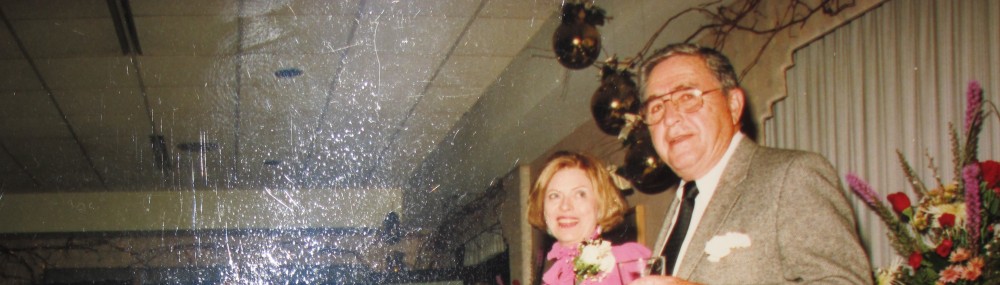
The guest columnists of 1960: Paul Tompkins

Topeka Capital-Journal
September 1960

(While Dick’s Snider is in Europe, with a tour sponsored by the Capital Journal, friends and critics agreed to serve as guests in this space. Today’s writer is Paul Tompkins, with the Sergeant Insurance Company and a neighbor.)

By Paul Tompkins

At last, long-suffering neighbors have a chance to tell their side of the story. What’s it like living next to Snider? You asked for it, Richard, old boy. Here’s my rebuttal.

From the first day we moved into the new house and Snider waited until all the heavy stuff was off the truck before showing up, from the day he Tom Sawyerd us into helping build and paint the yard fence, from the time it was 110 in the shade and he left Max Kiene and me with 14 tons of wet cement to finish his patio, I knew this slick talking Okie would bear more than a little watching.

Snider is probably the cleverest guy in the area. This was proven to me the time he talked that shrubbery salesman into letting him have more non-blooming, high-priced bushes than anyone else on the block.

As he and I sat in the shade the other day watching my wife dig crabgrass out of our front lawn, he assured me the frost would take care of all weeds next fall and do it a lot easier. I think he is probably right because the July sun took the snow off his driveway, just like he said it would last March.

He’s an optimist, too, this Snider.

When he planned his trip to Europe, he asked me to mow his lawn, trim the shrubs., weed the flower beds, and look after the place in general. Now, he knows I won’t do that. And he went to look at my place and see that I don’t even do that at home.

Our neighborhood is different than most any other, I suppose. We don’t necessarily do our yard work when it needs it. We do it when the tools are available. When there is only one spading fork among all of us, you spade the flower bed when no one else wants to use it.

My neighbor, Max Kiene, is probably the luckiest fellow in our part of town. When the Snider family pet Manfred the Wonder Dog gets out the pen, he comes over to see my two dogs, and when my dogs get out, they go over to visit Manfred. Kiene lives right between us, so he gets the benefit of having dogs, but he doesn’t have to own one.  There aren’t many people who would be willing to share their pets like Snider and me.

If you’ve ever read this column before, you know that Snider is a keen student of city politics. He has made some pretty broad statements about our city fathers. At one time you will recall, he referred to one of them as a “cheap politician.” Now this isn’t true. There’s nothing cheap about them. They’ve cost this town plenty of money.

I was sort of sort of sorry to see Snider move up from the sports desk. There doesn’t seem to be near as many free football tickets now as there was in the old job. I suppose managing editors don’t have as much influence as sportswriters

Sometimes, I don’t believe he appreciates the little things people do for him. Take last year, for example.

When Northwestern ran Oklahoma clear off the field and gave them the worst beating in years, we all sent him a sympathy card and put a black crepe ribbon on his door. To this day, he hasn’t sent any one of us a thank you note.

Along this line, Snider, I hope you’ll take good care of the suit and have it back to me by the middle of August. The wife and I plan to take a little trip to Kansas City and it is the only suit I have with two pair of pants.

We’ve watched with a great deal of interest the growth and development of the Snider family.

We all waited breathlessly for the arrival of the little Amy. We’ve watched both Stephen, Kurt climb on the school bus and go off to their first day of school. We all struggled through the housebreaking of Amy and Manfred.

With apologies to the jovial dentist of Medford Avenue, I pulled Steve’s first tooth, while his dad, the Joe Garagiola of Cornwall Street was off with Dev Nelson giving the color and background as K-State pushed its way forward from its own four-yard line, third down and 25 to go. (Note: Carnes and I have signed a nonaggression pact now. I promise not to pull any more teeth, and he won’t sell any insurance.)

Snider speaks two languages, English and profane. I sometimes wonder just how he manages to stay on the air after hearing his expressions when one of the boys breaks off one of his $18.95 night blooming cranberry bushes.

Uncle Sam could do a lot worse than the leave Snider over in Europe as a roving goodwill ambassador. With his ability to return your rake with the handle broken out, to explain that he can’t find the claw hammer he loaned him a couple of weeks ago and his knack for setting settling disputes among the four kids and there are only three popsicles to divide, I think he could convince Nikita that we’re on his side after all, and that nobody ain’t mad at nobody.

There it is, Dick, old boy. Now you have your choice, to stay in Paris, sipping a tall cool one at the sidewalk cafe and watch the mademoiselles go by or return to Cornwall Street, where ivy is growing every place except where it should, and face the wrath of an irate publisher for turning your column over to an amateur journalist who had an axe to grind.

PS: In case you do decide to stay, OUI means yes in French.

The guest columnists of 1960: Charles Howes

Topeka Capital-Journal
September 1960

(Charles Howes, who does some airplane driving and frequently has Dick Snider aboard, is today’s guest writer, discussing eccentricities of his peculiar passenger.)

By Charles Howes

I’ve wondered since Snider’s departure if he endeavored to have the pilot of his overseas jet route the flight from New York to Copenhagen via Oklahoma.

It isn’t a fantastic idea, in as much as I have precedent on which to draw. Every trip that we have made together was planned by Snider, and it was routed across that state to the south.

Of course, no one should be castigated for favoring his birthplace, but the extremes to which he goes have caused his fellow travelers to adopt countermeasures. Continue reading

The guest columnists of 1960: Max Kiene

Topeka Capital-Journal
September 1960

(Editor’s Note: The life and times of Dick Snider are further set out by a neighbor serving as guest writer while the columnist is in Europe with a tour sponsored by The Capital-Journal.)

By Max Kiene

When Dick asked if I would write his column for one time. While he was with the Capital-Journal Best of Europe Tour, I said, “Let me take your place on the tour and you stay home and write the column.” He replied that Mr. Stauffer had “ordered” him to go, and under those conditions he simply couldn’t accept my offer.

I told him I thought it was downright sporting of him to give me a chance to get even! (Knowing Snider, there must be a trick somewhere). He said he doubted if I would come up with anything worthy of the Pulitzer Prize. Besides, he will have the last word when he gets home.

My wife and I remarked to Barbara that it seemed a little peculiar that the guy with the largest family in the block would buy the smallest car. Barbara said, “Dick is more cunning than you realize; this way he won’t have to take the kids and me and Manfred the Wonder Dog along whenever he goes anywhere. There simply isn’t enough room in that oversized tinker toy for golf clubs, a wife, four kids and a dog.”

From my observation as next-door neighbor, it seems to me that Barbara is subject to more embarrassment than she deserves. For example, she tells of the time she and Dick checked into a hotel and just as the bellboy was leaving the room., Dick said to her, quote, what did you say your name was?” to quote a famous saying from a popular radio show of a few years ago, quote. Taint funny, McGee.”

For instance, a couple of years ago. During the basketball tournament at Kansas City, when Dick was sports editor, several of the neighborhood women were at the Snider’s house for morning coffee when one of the kids asked, quote, is daddy going to sleep here tonight?” The unasked question was, If Daddy isn’t sleeping here tonight, who is?

Recently, because Anne, Kurt and Steve kept talking about going, Amy was anxious to go to her. Aunt Peg’s wedding. Amy even had a new pair of shoes for the event and was excited about seeing her first wedding. Barbara was in the wedding party, and it was up to Dick to take the children. He said, quote. The boys and Anne, yes; but Amy, no.”

When this crisis in this Snider house arose, my wife offered to take Amy. Dick took the coward’s way out and okayed the idea, knowing Amy wouldn’t sit still that long. All went well until she saw her mother and sister in the ceremony, Then in a loud voice, “I want to talk to mommy and play with Anne.”

Barbara was further embarrassed because Dick just ignored the whole disturbance

Recently, Barbara prepared Dick’s favorite dinner and fried chicken and fresh peach pie., expecting him at about 5:30 or 6:00. He called her late in the afternoon to say he was going to play nine holes of golf, that he would be home in time for dinner. One thing must have led to another because he arrived about 9:30. The special dinner had long before been put away, so he decided to make a pizza, even though the atmosphere was rather chilly around there. He finally got the pizza made but had flour all over the kitchen, family room and dining room. Barbara had all that to clean up, too, and decided she just couldn’t win. In spite of all this, Dick is a pretty good guy, and we are glad he and Barbara are our neighbors.

Recalling the Topeka Flood of 1951

Topeka Capital Journal
July 22, 1996

It must have been Hurricane Bertha that reminded Lou Falley of the great Topeka Flood. It happened 45 years ago, and Falley, business tycoon, philanthropist and historian, remembers it in grim detail.

He was telling me about it on the phone, and asking me if I knew certain streets and buildings in North Topeka that he was talking about. When I said no, he said he’d drive me over there and show me where the flood took its awful toll.

We met in the parking lot of the Falley’s Market on Gage Boulevard, and I got in his car. It’s a two-year-old Chevrolet, and a small one at that, far from the top of the line. It proves he doesn’t feel that he needs to try to impress the populace with a fancy set of wheels.

/more Lou is 91 now, but he drives like he wants to get where he’s going, and he expresses some impatience with slower drivers. We headed north and crossed the river that got out of hand in 1951, and then we turned east on Lower Silver Lake Road.

Before long, we crossed the railroad tracks where his parents and youngest brother were killed in 1917. The new family truck, a Smith Former with chain drive and hard rubber tires, stalled on the tracks and was hit by a fast-moving passenger train. It happened within sight of the Falley home on the South side of Lower Silver Lake Road.

Lou recalls that on the afternoon of July 12, 1951, he was visiting his brother, Sam, who was living on the old Falley home place. It had been raining hard for days, and they recalled a warning their dad had given.

He had said if water ever ran from the West across the north side of the house, it was time to get out of all of North Topeka, because the house sat on ground about 25 feet higher than downtown North Topeka. As they talked, they watched water running that very course, So Lou went into action.

He was a member of the North Topeka Draining District, and he got the chairman of that group, Kelley Lewis, to phone Topeka Mayor Ken Wilke and ask him to order the evacuation of North Topeka. Wilke said he’d check out the situation, and at 2 p.m. he had all the city’s radio stations advise North Topekans to move out.

At about 10:30 p.m. the flood hit and almost immediately North Topeka was underwater. Travel was by boat only, and it was treacherous.

The main “dock” for launching boats was the North End of the Topeka Boulevard bridge. Lou checked in there on Friday morning, and was put to work. Bill Cardon of the Highway Patrol and Warren “Waddy” Shaw of the National Guard asked him to direct the work of four rescue boats they had commandeered.

They rescued more than 200 people the first day. These were diehards who had refused to evacuate, and most were in upstairs rooms, yelling for help. Four men were pulled from the top of a boxcar near the Garvey grain elevators.

Many people wanted to get from the bridge to dry land on Rochester Road, and on the third day a big barge, powered by two 150-horsepower outboard motors, and manned by two Navy men, was ready for this shuttle service.

Lou, however, said he doubted they could make the dangerous turn at the corner of Paramore and Tyler because of the swift current. The Navy said it could handle any situation, so Lou and another man in one of the small boats led the barge, with 17 aboard, on the trip.

Sure enough, at “Amen” corner, the barge slammed into a light pole and overturned. The 17 grabbed trees and low hanging phone lines. All yelled for help and, and some panicked and screamed.

Lou and his partner could rescue two at a time and take them to the roof of a nearby house. Lou told the men in the water to hang on, and they’d all be saved. And, he challenged them.

“There are mice, and there are men,” he said, “So I guess we’ll rescue the mice first.”

At that point, he said, they all quit pleading for help. Nobody wanted to be among the “mice.” Eventually, all 17 were hauled to safety on the roof of the house and later picked up by other boats.

As the flood water receded, residents wanted to return, and Lou was put in charge of determining which neighborhoods were ready for them. He recalls keeping some families away from their homes until dead cows and hogs could be removed from the porches, and even the roofs.

At the infamous corner where disaster almost struck, Lou and I stopped a woman wanting to ask her if she had lived there in 1951. We introduced ourselves and she was totally unimpressed. Maybe Lou should trade that Chevy for a 32-valve Belchfire Bazoomer.

He probably could get a loan, because I think he still owns a bank.

When the great outdoors grates

Topeka Daily Capital
June 21, 1959

The grizzled Old West Texan was sitting on the patio of this huge and luxurious new home when somebody asked him what’s it like, now that he had struck oil on his parched land and had become a very rich man.

“Well,” he said, “Before we hit oil, we lived out here in a shack and we cooked inside and went outside because there was no plumbing inside. About the only difference now is that we go inside, but damned if we don’t cook outside.”

This analysis offers two interesting possibilities as subjects for today’s epistle – outdoor privies and outdoor cooking. It happens that I am somewhat of an authority on both, but I will deal first with the latter, which, to me, is a problem bigger than wheat rust and tornadoes. Continue reading

Best Steak in the World

Topeka Capital-Journal
May 22, 1991

The North Star Supper Club is a good place to eat, particularly if you’re hungry and like steak and french fries smothered in chicken gravy. It isn’t very sophisticated, but the place has been there so long, and created so many temporary gluttons, it is more than just an institution. It is almost a shrine to meat-and-potatoes people seeking the ultimate fat fix.

It might qualify Topeka as the cholesterol capital of the free world, but for the faithful who keep returning it is the only place to go if you want a meal fit for four linebackers and their Dobermans.

Dinner there is a can’t-miss deal, because the steaks are large and uniformly good
And the fries and gravy are served on the plan the Okies call “pitch till you win.” In
other words, you get all you can eat, and the gravy served with the assurance from the waiter that it is low calorie stuff. Continue reading

Buck O’Neil on Satchel Paige

Topeka Daily Capital
May 14, 1958

Jackie Robinson’s recent uproar over when and how Negroes reached the major leagues brings to mind again the great number of Negro stars who came along too early to take advantage of the memorable day when Branch Rickey erased the color line.

One of those is John (Buck) O’Neil, who played with and saw the biggest names in Negro baseball for 18 years. He was a star first baseman for the Kansas City Monarchs for 17 of those years, and managed them for seven years. He now is a scout for the Chicago Cubs.

He had a lifetime batting average of .300 in the Negro Major League and twice led the league in hitting with a mark of .350. He once was telling Sec Taylor of the Des Moines Register about life in the Negro League, and the conversation went like this: Continue reading

Topeka Daily Capital
May 14, 1958

Jackie Robinson’s recent uproar over when and how Negroes reached the major leagues brings to mind again the great number of Negro stars who came along too early to take advantage of the memorable day when Branch Rickey erased the color line.

One of those is John (Buck) O’Neil, who played with and saw the biggest names in Negro baseball for 18 years. He was a star first baseman for the Kansas City Monarchs for 17 of those years, and managed them for seven years. He now is a scout for the Chicago Cubs.

He had a lifetime batting average of .300 in the Negro Major League and twice led the league in hitting with a mark of .350. He once was telling Sec Taylor of the Des Moines Register about life in the Negro League, and the conversation went like this: Continue reading