Topeka Capital Journal.
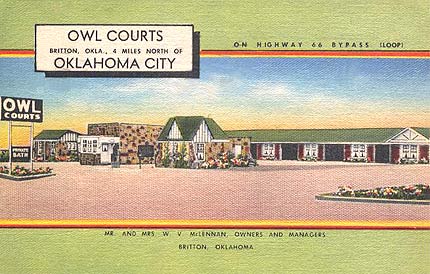
Because I didn’t know any better, I thought. Britton, Okla., where I grew up, was a great place to be in the summer. Sure, it was hot, and it could be as miserable as any little town on the prairie praying for more rain and less dust. But I remember what was good, along with what was bad and ugly.
There wasn’t a swimming pool in the town or a swimming hole near it, but not too far away, with Spring Lake, with the Sandy Shore, and occasionally our whole clan, including aunts, uncles and cousins, would go there, pack a meal, plus soda pop and home brew, and we’d stay all day. We didn’t know it could get any better than that.
My Aunt Buel’s employer and companion, Mr. Barnes, owned bits and pieces of land all over the area, and one parcel high on a hill near Oklahoma City included a picnic Grove and a spring fed stream. We called it “the top of the world,” and we spent a lot of summer Sundays there eating fried chicken.
My dad owned a drugstore on Britton’s Main Street, and as soon as I was big enough to carry a tray, I worked there. Evenings I was a car hop. I made 10 cents an hour and learned a lot, dealing with adults who felt free to get nasty with a kid if they didn’t like the looks of their nickel ice cream cone.
When I was older, I worked inside, at the soda fountain, where I’d look forward to seeing the well- endowed Gray sisters, brazenly wearing short shorts and halter tops. They’d come in almost every night for a double dip cone, which I would build carefully, and slowly.
Summer brought “medicine shows” to Britton, and the best of them was Little Doc Roberts selling his Tay-Jo Tonic. He had a banjo player and a blackface comedian for entertainment, but his pitch for Tay-Jo was almost as good.
He would bellow, “A feller told me the other day I should take this show to Arkansas, because there’s more suckers over there. But folks, I ain’t looking for suckers. I’m looking for honest, hard-working people who want to feel better, because I can help them.”
Tay-Jo would make you feel better fast. When authorities finally cracked down on medicine, shows, a state analysis showed it was about 99 percent alcohol. The price was $2 a bottle, three bottles for $5. They stood in line to buy it.
Summer also brought tent revival services, and one of them was on a vacant lot across the street from our house. The preachers were imported and were every bit as good as little Doc Roberts. They sold fire and brimstone, and at times some participants looked like they were wrestling Saint Peter for the keys to the Pearly Gates.
We had religion, but we also had scandal, or at least one I can recall. One of our solid citizens had a high school athlete staying in his home, and every morning he would leave early for work. But one morning he left and then came back and found the athlete in the wrong bed. Wow.!
We had a town baseball team, and I was one of the kids behind the backstop chasing foul balls. About half of us chased them to return them to play, and the other half to steal them. I will say I returned balls only after I’d hidden one in a row of cotton.
You knew it was summer in Britton when you saw Russell Brown pushing his lawnmower down the street and carrying garden tools on his shoulder. Russell, an unforgettable character, mowed lawns, spaded garden plots, cut weeds and did whatever else needed doing. At the end of the day, his shirt and overalls would look like he’d been swimming, and he’d stop in the store for his treat – a nickel double dip.
Summer brought. Missus Hadley going door to door selling eggs and vegetables and talking about her granddaughter, Halad, named from the Lord’s Prayer, as she explained: “Halad be thy name.”
I had a paper route, delivering the Oklahoma City Daily Oklahoman and Times seven mornings and six evenings per week. I learned a lot from customers who would tell me they couldn’t pay the 18 cents they owed me for the week’s papers.
My dad worked a lot of 16-hour days in the drugstore and never had taken a vacation, so one of my most vivid memories is this summer he and Mr. Barnes took a trip to New Mexico to camp and fish. I remember he took my mother’s favorite sparkling clean skillet, and brought back a blackened piece of junk. He got the silent treatment.
Summer in Britton meant extra ice cream, extra ice every day for the ice box, sleeping outside in the yard to beat the heat, looking for golf balls and watching out for snakes, learning to “roll your own” smokes, and growing up. A lot of growing up.