Salinger to Snider: Take my hike, please!

Topeka Capital-Journal
August 26, 1994

Almost every day, it seems, there is another story in the news about the benefits of exercise, particularly for senior citizens. Studies keep offering strong evidence that physical activity is the best investment for those who want to stay healthy longer.

Americans listen to what is being said about the value of exercise. There are so many people into it now the time surely will come when there will be more miles of walking, jogging, hiking, and skating paths then there are miles of interstate highways.

Traffic on the paths is heavy now and can only get worse. There is an exercise explosion, taking place, and you can see men and women of all ages, with the latest student equipment and attire, trying to shape up and maybe prolong the inevitable.

You also can see old crocks, who remind you more of hobo looking for handouts than exercise buffs. They are proof the benefits of activity are available to all, and that you don’t have to cater to fat or fashion to fight fat and seek the fountain of youth.

Where did all this start? I think it started with a long walk more than 30 years ago. Robert F. Kennedy, appointed by his brother, President John F. Kennedy, who said at the time that Bobby could use the experience.

One Saturday or Sunday, I don’t recall which, Bobby went to the Chesapeake & Ohio Canal toll path, where horses once pulled barges on the waterway, and walked up into Maryland for 50 miles. He did it without fanfare, without inviting the media to tag along. He just went out and did it.

What prompted it was publicity about Marines routinely making 50-mile marches, if walking that far can ever be routine.

President Kennedy liked to needle his press secretary, Pierre Salinger, who loved the good life and had the shape to prove it, and one day Kennedy, in front of the media, said Pierre, to prove his metal, should walk 50 miles.

Salinger responded with one of the most unforgettable lines ever to come out of Washington. He said, “I may be plucky, but I’m not stupid.“ He knew that if he tried to go 50 miles, he stood a good chance of coming back in a box.

But the president kept the needle in, and after Bobby’s walk became front page news, the pressure was really on Salinger. The media covering the White House wouldn’t let it die, so he needed help. Believe it or not, he turned to yours truly.

At the time, I was administrator of the President’s Council on Physical Fitness and Sports, and in the wake of Bobby’s walk, we had issued a warning to everybody who was saying, “if Bobby can do it, I can do it.“ We said don’t try it unless you’ve been cleared by your doctor.

Salinger seized on that. He called me and said, “you’ve got to get me off the hook.“ So, I issued a statement, saying Salinger was too much a national treasure to risk losing over a simple hike, probably could do without working up a sweat, and that he was exactly who we had in mind in the medical warning.

The media knew it was hokum, and accuse Salinger of hiding behind a bureaucrat, but it died out. Salinger later wrote a book about his White House years, and my wife asked him to autograph a copy she was giving me as a gift. He wrote, “you saved me from a fate, worse than death.“

It was President Eisenhower, who created the Council on Physical Fitness. But it was the Kennedy administration that energized it. The people who came to Washington with the Kennedy’s didn’t just talk fitness; they did it.

One of them was Dean Markham, who had played football in Harvard University with Bobby. He asked me to play golf, so before work one morning I met him at a course. I teed off first, and then he teed up, hit his ball, grabbed his golf bag and took off in a dead run down the fairway. I stood there dumbfounded.

Finally, he stopped, turned and yelled to me, “come on, we’re not going to get any exercise just walking around this golf course.“ What he said is as true today as it was then, but that still is the only time I have run 18 holes. Obviously, I never played with Markham again.

To be sure, there were joggers and walkers, and what have you before the Kennedys came along, but I always will believe they triggered the sudden popularity of exercise for everybody.

And about Bobby’s walk: after he did it, I was worried that as administrator of the fitness program, I would be asked if I had tried it. I was afraid that any minute the phone would ring and I would be embarrassed.

So, one Sunday morning, in the company of two Pentagon Marines, and a friend who said he wanted to try it just for the hell of it, I set out. If I told you what happened, you wouldn’t believe me. The point is, nobody ever asked me if I tried it. Nobody.

This Orange Bowl drama was off the field

Topeka Daily Capital
January 1963

WASHINGTON – This man and his wife came home at 3:30 a.m. from the New Year’s Eve revelry. They had wound up at the Statler Hilton and, as the saying goes, the Hilton was ‘tiltin when they left.

At home, the babysitter was awfully excited. “The White House has been calling,” she said. She gave the name of the man who was calling.

The call was returned. The man had been calling through the White House switchboard. Actually, he was at home.

“The courier plane is flying to Palm Beach at 8:00 a.m. today, “And a bunch of us have decided to ride it and go to the Orange Bowl game. We can just make it.

“You and your wife are invited,” he continued. “The main reason you’re invited,” he added with a sort of nervous chuckle, “is that we we figure you’re the man who can get tickets for us.”

The man listening flinched. It was something like eight hours before the kickoff, and the game was reported as a sellout.

“How many tickets?” he asked.

“Twelve, counting two for you.”

“I’ll try for 10,” said the man, “considering the takeoff is in something like four hours and we’re not exactly prepared to go.”

The man tried. He called Ken Ferris, Oklahoma’s business manager, at a Miami Beach Hotel. It was now about 4:00 a.m.

“What’s wrong?” Ferris asked anxiously.

“Nothing much, said the man, “except that I need 10 tickets.””

“I can get you 10 for our opener next season at Southern Cal,” said Ferris. “I can even get you 10 for the Texas game. What game do you mean? I know you wouldn’t call me at 4:00 a.m. and ask for 10 for today’s game.”

“Today’s game,” said the man, “is what I have in mind.”

It was fortunate at that time that Ferris is a deacon in his church, and a man not given to anger or swearing. He said he’d try, and that the party of 10 should call at the outside door of the Oklahoma dressing room no later than 11:30 AM. That meant he’d have the tickets.

The man called back to the White House caller. Then he went to sleep and barely made it to the TV set next day to see the game from there. Two weeks later, he saw Ferris. He smiled, but Ferris didn’t.

“That guy never picked up those tickets,” Ferris said. “Nobody ever showed up. We got stuck with $65 worth of tickets.”

It was another two weeks before the mystery cleared. It seems the president visited the Oklahoma dressing room at about 11:30, and that local policemen had that area blocked. Nobody – absolutely – except the president’s party could get near the dressing room door.

“It was sort of a mess,” said the man who was to pick up the tickets. “The local police wouldn’t let us near the place, and you can’t blame them.” they got in, but that’s another story. . . .

(Editor’s Note – January 1, 1963: Alabama defeated Oklahoma 17-0 in the Orange Bowl. In the game attended by President John F. Kennedy, the Crimson Tide were led by sophomore quarterback Joe Namath.)

The family Cushing: great neighbors and friends, no fences

(Editor’s Note: Marie Donnelly Cushing passed away peacefully this month at the age of 98. She and Dr. Vincent Cushing were married 73 years when Dr. Cushing passed in 2018. This is a tribute to the couple and their family, written for the occasion of their 50th wedding anniversary.)

Congratulations from Barbara and Dick Snider

Barbara and I met Marie and Vin in 1961 when we moved to Maryland from Kansas. We rented a house on East Bexhill Drive, and our backyard was separated from the Cushing’s backyard only by a hedge. It took our four children only about an hour to discover the hedge, and the Cushing kids on the other side. Before the day was over, we met Marie and Vin.

We moved away in 1964, but returned a year later, and we were determined to buy a house in the neighborhood. Luckily, we found one on Old Spring Road just two blocks from the Cushings.

It took us — particularly me — some time to learn exactly how many children they had. It seemed to me that every time I was in their home, I would see a child I was sure I hadn’t seen before. It wasn’t until they had a family portrait taken in their living room and gave us a copy that I began to get them straightened out in my mind. The portrait is the only time I have ever seen them all together, sitting still.

We had some great times with the Cushings, and some perilous times, too. Continue reading

Lunch with Sen. Kassebaum (Gambling Pays Off)

Topeka Capital-Journal
Oct. 16, 1989

Let it be said that the lady kept her word. Senator Nancy Kassebaum, true to her promise, bought my lunch last Thursday in Washington to make up for the five bucks she cost me when I bet a lawyer, of all people, that she wouldn’t run for office again next year. Continue reading

Bud Wilkinson: To a Very Rare Man

Topeka Capital-Journal
February 14, 1994

Last Wednesday night Jay Wilkinson called to say his dad, Bud, who made history as football coach at Oklahoma, was dying and probably wouldn’t make it through the night. He didn’t. Next morning we heard on the radio he had died.

Later in the morning I tried to call Charlie Hoag to tell him about Bud, but I couldn’t reach him. It wasn’t until the five o’clock TV news that we heard there had been a wreck on the Turnpike and that Charlie’s wife, Salli, was killed and he was seriously injured. The day had provided a double dose of bad news.

Wilkinson and Hoag had closer ties than you might think. In the early 1950s, Bud was one of the best coaches in the country and Charlie was a superb running back at KU , as well as being a key member of a national championship basketball squad. Continue reading

Averting a National Fitness Crisis: A Story of Pluck on the Front Lines

Topeka Capital-Journal
Jan. 9, 1991

There is more bad news for would be war correspondents. It wasn’t enough that the prospective war zone bans booze and wanton women, so now the Pentagon says journalists must pass a physical fitness test before they will be accredited to cover the troops in Operation Desert Shield.

Several men and women already have been tested, and only a few men have failed. This is not surprising, since men are less inclined to take this sort of thing seriously. Those found wanting probably went to the test directly from a wholesome lunch of spicy chili, barbecued ribs, cheesecake and a few beers.

Some men aren’t meant to pass physical fitness tests, and this simple fact calls to mind the greatest fitness crisis in the country’s history. It occurred in February 1963, and I am proud to say I played a major role in resolving it.

The White House was occupied at the time by John F. Kennedy, and it probably was his Irish humor and his bent for playing a dirty trick on his portly press secretary, Pierre Salinger, that started the whole thing. Robert F Kennedy, the attorney general, got into it, and in the end it turned out to be funny to everybody but Salinger.

The story goes that President Kennedy somehow learned that Teddy Roosevelt, when he was president, had sent a letter to the commandant of the Marine Corps saying every Marine should be able to walk 50 miles amd that White House personnel probably should be able to do it, too. You can smell a plot being hatched here.

Continue reading

JFK Tops for Intentional White House Humor

Topeka Capital Journal
Aug. 12, 1991

In this country we like to say that anybody can grow up to be president, but that’s like saying anybody can win the lottery. The odds are against anyone who has the White House in mind. That goes even for a vice president, particularly if his name is Dan Quayle.

All most of us can do about the presidency is hope we vote for the winner, and then hope he does a decent job. We also can hope he has a sense of humor, because when you consider the shape the country is in, it is clear the head man needs to be able to laugh and make others laugh with him.

jfkIf you were to rate presidents by their sense of humor, you would have to admit that, despite all his weaknesses, John Kennedy was the best ever. Throughout his career, his wit stands out like no president before or since.
Asked how he became a war hero, he said, “It was easy. They sank my boat.” During his presidential campaign he said his wealthy father would finance a victory, “but he flatly refuses to pay for a landslide.” Continue reading

On Assignment from the President

Topeka Capital-Journal
June 1, 1992

I ended the month of May with a blooper, and probably I’m starting June with another one, but some of us never learn. Last week I wrote that State Senator Frank Gaines of Augusta, who has announced his retirement, was a good man. It turns out he was a better man than I gave him credit for being. I should have known .

He was in the Legislature 24 years, and I noted that if he signed up for the plush pension plan legislators voted for themselves, he would qualify for about $25,000 per year. I added there was no reason to believe he hadn’t signed.

Since then I have been informed by a good friend of his, who would know, that Gaines didn’t take advantage of the souped-up pension. He deserves this apology and the respect of all of us.

I also have sentenced myself to do severe penance for this mistake, but not before I start June on the wrong foot by giving in to the irresistible urge to drop big names. It comes over me occasionally, and I am a pushover.

Maybe this one was caused by the recent new evidence from the two doctors that president John F. Kennedy was killed by two shots, fired by one man. Maybe it started me thinking about him and about my days as a dedicated public servant in Washington.

The story goes back 30 years, to the days when all public servants were dedicated and all Kansas State football fans were long-suffering. The story doesn’t have anything to do with K-State, but it does have a little to do with football. Continue reading

The Summer Wind of 1942

Topeka Capital Journal
May 8, 1998

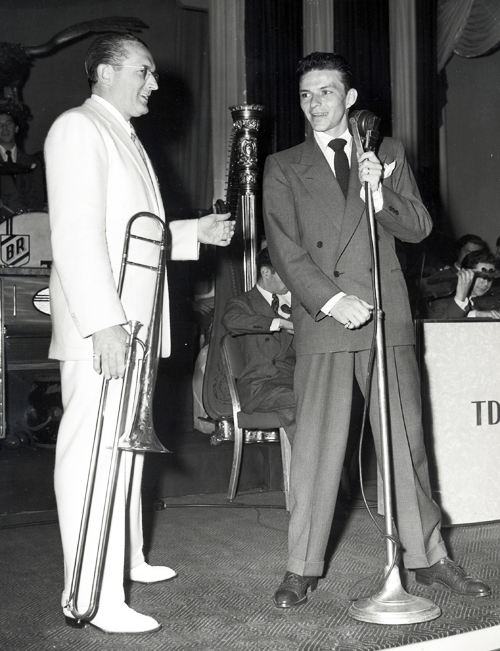
I saw Frank Sinatra perform live with the Tommy Dorsey band on the stage of a Washington DC theater in 1942. I stood in line with hundreds of others to get tickets to an early matinee, and when the show was over I was a fan of his, and I’ve been one ever since.

When he died this month I thought about that day, and before long I was drifting through memories of the years before and after it and reliving the chain of events that got me to Washington in the first place.

sinatradorsey1942

Tommy Dorsey, Frank Sinatra, 1942

By the time I saw Sinatra, I had been there more than a year, and had seen the Glenn Miller Band on the same stage. I thought at the time that nothing ever would top that, but I suppose Sinatra did. He was one man, and maybe there never has been another single performer who could move an audience like he did.

I was in Washington working for the Federal Bureau of Investigation. I was there because the FBI, expanding rapidly to handle the problems of impending World War 2, had gone all over the country interviewing candidates for clerical jobs. Salary: $1,440 per year, or $120.00 per month.

Continue reading

Credit card was part of the family

Topeka Capital-Journal
March 19, 1993

NEW ORLEANS – In the spring of 1961, a Topekan named Daryl Schoonover drove his family to Washington, DC for a sightseeing vacation, and invited me to dinner one night. I was there working in President Kennedy’s physical fitness and sports program, and my family had not yet joined me.

Schoonover charged the meal to an American Express card. I had heard of the card, but this was the first time I had seen one in operation. I asked him about it, because the idea of putting off paying for anything always has appealed to me.

He said all I had to do was apply and prove to American Express I was a person of at least modest means. The next day I found a number to call and told a few lies. Continue reading