On Assignment from the President

Topeka Capital-Journal
June 1, 1992

I ended the month of May with a blooper, and probably I’m starting June with another one, but some of us never learn. Last week I wrote that State Senator Frank Gaines of Augusta, who has announced his retirement, was a good man. It turns out he was a better man than I gave him credit for being. I should have known .

He was in the Legislature 24 years, and I noted that if he signed up for the plush pension plan legislators voted for themselves, he would qualify for about $25,000 per year. I added there was no reason to believe he hadn’t signed.

Since then I have been informed by a good friend of his, who would know, that Gaines didn’t take advantage of the souped-up pension. He deserves this apology and the respect of all of us.

I also have sentenced myself to do severe penance for this mistake, but not before I start June on the wrong foot by giving in to the irresistible urge to drop big names. It comes over me occasionally, and I am a pushover.

Maybe this one was caused by the recent new evidence from the two doctors that president John F. Kennedy was killed by two shots, fired by one man. Maybe it started me thinking about him and about my days as a dedicated public servant in Washington.

The story goes back 30 years, to the days when all public servants were dedicated and all Kansas State football fans were long-suffering. The story doesn’t have anything to do with K-State, but it does have a little to do with football. Continue reading

Ending Tulsa Silence, Better Late Than Never

Topeka Capital Journal
March 6, 2000

The state of Oklahoma was the site of one of the worst race riots in history in 1921, but for almost 75 years the chances are you wouldn’t have heard about it, even if you lived there, studied state history in its schools, or read newspapers and periodicals in its libraries. Oklahoma covered it up and treated it like it never happened.

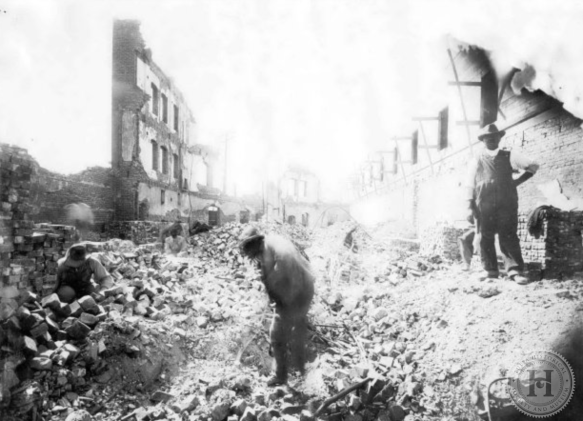
On June 1, 1921, the riot erupted in Tulsa and resulted in 40 blocks of an upper class black neighborhood being looted and burned. The Oklahoma National Guard said 26 blacks and 10 whites died and 370 were injured, but eyewitnesses said at least 100 blacks were killed, and the correct figure probably was more than 300.

For 75 years, no memorial of any kind was erected, no city sponsored commemorative services were ever held, and not a single person ever was charged with the killings or the fires. In the library’s, every mention of the riot, the fires and the organized white lynch mob was deleted from the Tulsa newspapers.

I was one of the know-nothing’s in the riot’s aftermath, despite having taken two courses in Oklahoma history, one in high school in the late 1930s, and a forced repeat in college in the 1940s.

If there ever was a mention of the Tulsa riot in either course, I don’t remember it. In fact, from kindergarten to college diploma, all of it in Oklahoma, I don’t remember hearing a single word about it. I believe I would remember, because I like history, even down to taking an elective course called, “U.S. relations in the South Pacific,” or as I called it, “An Okie in Bora Bora.”

And, if I can remember Bob Wills doing “Take Me Back to Tulsa,” couldn’t I remember a riot?

I’m not alone in not hearing anything about the riot until recently. When Tulsa finally got around to remembering it, in 1996, the New York Times carried a couple of lengthy stories about it, and Susan Schaefer of the Topeka and Shawnee County Public Library resurrected them for me.

Tulsa mayor Susan Savage told the Times she grew up in Tulsa, but it was not until she was an adult that she learned about the riot. She said, “it just wasn’t something people discussed.”

The Tulsa County District Attorney in 1996 was Bill LaFortune, who said, “I’m 39 years old, born and raised in Tulsa, and I never really learned about the race riots until the last several years.”

The riot was sparked by a mistake. A 19-year-old black shoeshine man was arrested for supposedly assaulting a white teenage elevator operator. Police later would determine he stumbled into the girl accidentally, committing no crime, and charges were dropped.

But before that happened the afternoon newspaper headlines screamed, “Nab Negro for Attacking Girl in Elevator,” and the story said angry whites were gathering in the courthouse to lynch the man. More whites joined the mob, blacks armed themselves, and the riot was on.

The Greenwood section of Tulsa was known as the as the “Negro Wall Street of America” because blacks who lived and worked there enjoyed a higher than average measure of prosperity. But many lost homes and businesses, and the city never paid a dime of reparations.

The final tally was 23 churches and more than 1,000 homes and businesses leveled. When it was over, witnesses said, trucks loaded bodies of black victims and took them to two local potter’s fields and common graves. Hundreds of black families fled Tulsa, never to return
Picture1

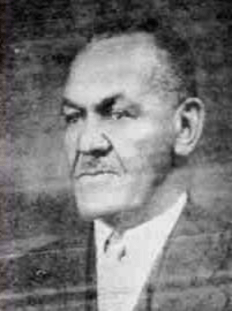
One who survived was J.B. Stradford, who owned a hotel in a rooming house in the doomed area. When he heard that armed men, black and white, were heading for the courthouse, he went there to try to talk the blacks into returning to their homes. But shooting started, and Stradford was charged later with inciting the riot.

He jumped bail in Tulsa and went to Chicago, where he became a successful lawyer. His descendants include a lawyer who is a former U.S. ambassador, a Circuit Court judge, and a college professor.

When the judge, Cornelius E. Toole, Stradford’s great-grandson, heard Tulsa had decided to remember the riot, he contacted an Oklahoma legislator, Don Ross, and asked about clearing Stradford’s name. Lafortune took care of that, and in all, 62 blacks indicted by an inflamed white grand jury in 1921 were cleared.

So, 75 years late, in a ceremony in the Greenwood Cultural Center, across the street from the spot where Stradford’s hotel was burned down, he received an honorary executive pardon from the governor of Oklahoma. His descendants said, better late than never.
Screen-Shot-2018-11-01-at-2.56.31-PM

(Editor’s Note: This column is posted as written 20 years ago. In 2018, Tulsa World Managing Editor Mike Strain wrote: “In our newsroom, we have begun using the term massacre. We also will use the term riot, but it often will be in the context of explaining that the events of 1921 had commonly been known as the Tulsa race riot.”)
The Summer Wind of 1942

Topeka Capital Journal
May 8, 1998

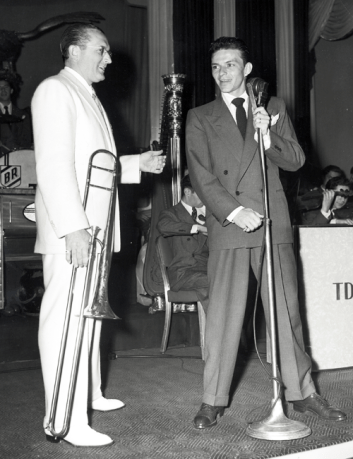
I saw Frank Sinatra perform live with the Tommy Dorsey band on the stage of a Washington DC theater in 1942. I stood in line with hundreds of others to get tickets to an early matinee, and when the show was over I was a fan of his, and I’ve been one ever since.

When he died this month I thought about that day, and before long I was drifting through memories of the years before and after it and reliving the chain of events that got me to Washington in the first place.

sinatradorsey1942

Tommy Dorsey, Frank Sinatra, 1942

By the time I saw Sinatra, I had been there more than a year, and had seen the Glenn Miller Band on the same stage. I thought at the time that nothing ever would top that, but I suppose Sinatra did. He was one man, and maybe there never has been another single performer who could move an audience like he did.

I was in Washington working for the Federal Bureau of Investigation. I was there because the FBI, expanding rapidly to handle the problems of impending World War 2, had gone all over the country interviewing candidates for clerical jobs. Salary: $1,440 per year, or $120.00 per month.

Continue reading

Remembering mom

Topeka Capital-Journal
May 11, 1986

The nuns who taught us in the grade school saw to it that we learned early and well the importance of Mother’s Day. Like we always did at Christmas and Easter, we hauled out the crayons and drew a special card for mom.

img_20200520_173328185

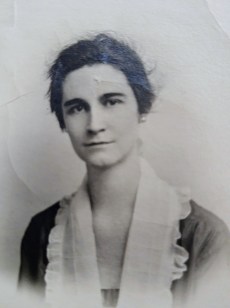
Leona Frances Shively

We spent so much time with the crayons, doing those cards, that it’s a wonder we learned to read and write and do our ciphering. But we did, and the cards were, in our minds, works of art.

I remember sister Mary Chrysostom best. She was my teacher in the 4th or 5th grade. She would draw a sample card on the blackboard and we would copy it as best we could.

She would come around and help the less gifted, and that’s one of the reasons I liked her. She spent a lot of time with me, so my card always came out looking pretty good.

The cover would have maybe a hill or two, some birds, a tree and a flower, and above it or below it or across it would be the word, “mother.” I was best at drawing hills and the sun. I was fair with the birds, terrible with trees and flowers.

Inside were two things. One was the message, expressing our love for mom. The other was called a “spiritual bouquet.” It was a list of prayers we had offered – or we were promising to offer – in mom’s behalf.

Even way back then I was into deficits. I’m afraid I padded my bouquet.

We would fasten these crayon-covered sheets together with colored string, or brass paper fasteners and then, at the proper time, present the card to mom.

She would express genuine pleasure at the total effort, an equally genuine surprise at the numbers button being promised. She never said anything, but I probably wasn’t fooling her.

I probably never did fool her. I know I didn’t the day a couple of other foolhardy adventurers and I skipped school to go downtown and hang out for awhile, and then go to a special high-noon baseball shootout between the Oklahoma City Indians and the Tulsa Oilers. Continue reading

A Trip to Oakwood

Topeka Capital Journal
April 14, 1999

When my brother Al and I planned our trip to western Oklahoma, we knew we’d see the place where we were born, and places where a lot of our ancestors are buried. What we didn’t know is that we’d also see Rollin Shaw, our next door neighbor more than 70 years ago in Oakwood, our birthplace.

We hadn’t seen him since the Sniders moved from Oakwood in the mid 1920s, but shortly before we headed back down memory Lane, Al’s daughter Claire, found him on the Internet, listed him as a resident of Dewey County and giving a phone number.

img_20200422_164514124

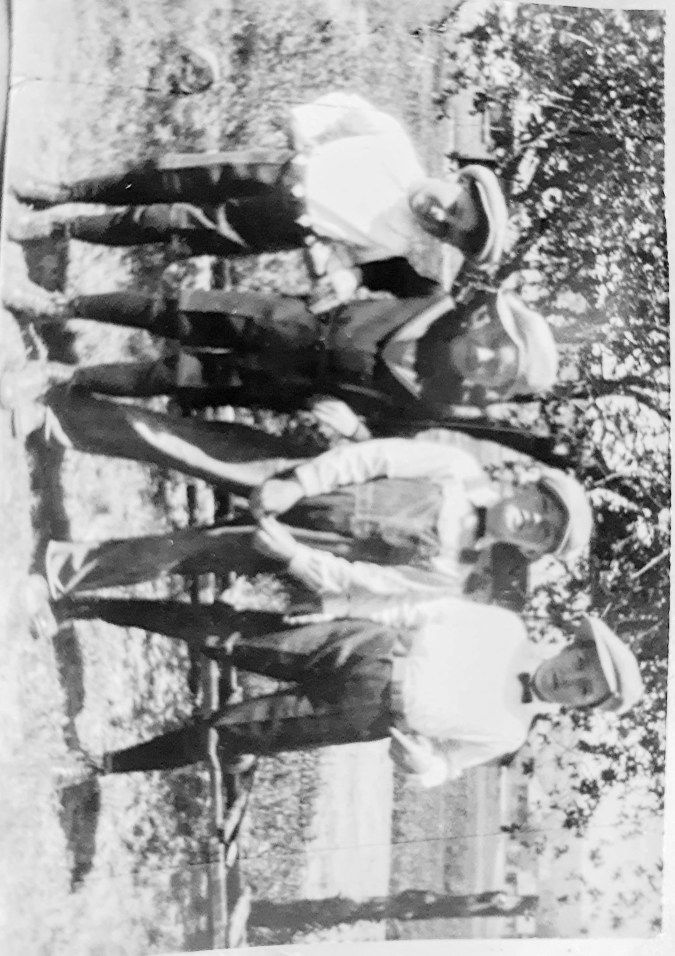
From left: Dick Snider, Al Snider, Rollin Shaw, Dan Snider circa 1925

We called him and he remembered us, and after he recovered from the shock we arranged to meet next day at the Phillips 66 station in Oakwood. We had lunch, he took us on a tour of what’s left of the town, and then we went to the farm home where he has lived for the past 57 years. Continue reading

Radio Blessings on the Road to Austin

Topeka Capital-Journal
March 26, 1993

AUSTIN, Tex. – You will be pleased, I am sure, to learn the Snider family father-and-sons safari is over. It ended where it began, in the New Orleans airport. I delivered Steve and Kurt for dawn flights home, and we had a final cup of coffee, resisting the feeling the occasion called for a farewell milk punch or Ramos gin fizz.

We spent our last two nights together in New Orleans, after visiting Natchez and Vicksburg. We finally got our fill of oysters and blackened this and blackened that, better known as napalm cooking. No wonder the natives are called Ragin’ Cajuns.

While Steve and Kurt flew home, I headed for Texas to join my annual golf outing. I left the Deep South the same way I entered, motoring along in my elegant Edsel II and listening to radio evangelists.

It wasn’t that after a spell in New Orleans I felt the need to repent. It’s simply the fact I like to listen to radio preachers, and in the South you can find them all over the dial, day or night. They are entertaining, and a few have a sense of humor. Continue reading

Some Civil War stories better left to books

Topeka Capital-Journal
March 24, 1993

VICKSBURG, Miss. – The Kansas monument in the Civil War battlefield here is different, to say the least. The monuments, in what is now a National Park, were donated by the various states to honor the troops, on both sides, who fought here.

Some are huge, taking up hundreds of square feet or towering far above the scene of another slaughter in the war between the states. Most feature statues of soldiers with guns, or a lady of peace promising this would be the last senseless war. Some cost a million or more to build.

Most are made of marble or native stone and have special touches symbolic of the states they represent. Around every turn in the 16-mile drive through the battlefield there is another one, usually just as impressive as the last one .

KansasVicksburg

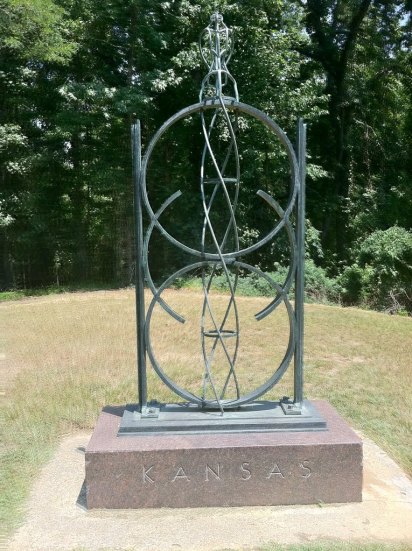
Kansas is a notable exception. Its monument is about 8 feet high and four feet wide, made of wrought iron, and cost $5,000 when it was erected in 1960. It features three circles that have a meaning never made clear to me and my two sons by the guide we hired for $20 to show us through the park.

There were many things that God never made clear to us, like what started the war, and who won. She spent all her time telling us the history books and Civil War scholars are all wet and that to this day very few people understand what happened.

When you hire a personal guide you have no way of knowing what you’ll get. You ask a woman in the reception area to get you one, and she calls the next name on the list. We drew a woman will call Connie, short for Confederate . Continue reading

Big Muddy Golf, Gambling, Blockheads

Topeka Capital-Journal
March 22, 1993

NATCHEZ, Miss. – The problem with traveling is that there are too many tourists in the places tourists like to go. This city, for example, is a popular tourist spot, but it should not be confused with New Orleans, which is a tourist trap.

New Orleans relies on gluttony, a capital sin of which we are all guilty to some degree. Natchez, on the other hand, is a long-running contest over which will last the longest – the antebellum homes that abound here, or the hordes of old folks who flock in here to see them.

The homes always win. In fact, most of them look better today than when they were built, and they all have weathered far better than the visitors.

So, you may ask, what is an old weather-beaten Okie, who wouldn’t know an antebellum home from a new Holiday Inn, doing in Natchez? Simple. I am playing daddy to two heartless offspring who sometimes seem to think I’m Daddy Warbucks. Continue reading

Credit card was part of the family

Topeka Capital-Journal
March 19, 1993

NEW ORLEANS – In the spring of 1961, a Topekan named Daryl Schoonover drove his family to Washington, DC for a sightseeing vacation, and invited me to dinner one night. I was there working in President Kennedy’s physical fitness and sports program, and my family had not yet joined me.

Schoonover charged the meal to an American Express card. I had heard of the card, but this was the first time I had seen one in operation. I asked him about it, because the idea of putting off paying for anything always has appealed to me.

He said all I had to do was apply and prove to American Express I was a person of at least modest means. The next day I found a number to call and told a few lies. Continue reading

Lessons in Family and Basketball

Topeka Capital-Journal
March 17, 1993

For weeks, our two sons, Steve in Maryland and Kurt in California, have taken turns calling me to make sure I know the game plan. I have it down pat. I am to pick them up at the New Orleans airport today. It is Saint Patrick’s Day, but that has no bearing, since the Snider family is about as Irish as Paddy’s bratwurst.

It was decided weeks ago it was time for another reunion, and the two of them, without consulting me, chose New Orleans as the meeting place. They explained it was “convenient” for all three of us.

That’s easy for them to say. They fly a few hours nonstop to get there and back, while I drive a few days to get there and back. That’s their idea of a square deal, and it gets even worse. In the four days we’ll be together, I will provide the transportation and who knows what else.

The plan calls for us to explore New Orleans, visit Natchez, Miss., the Civil War battlefield at Vicksburg, play a little golf along the way, and seek out food and spirits sufficient to maintain our stamina and morale. My stomach churns at the thought. Continue reading