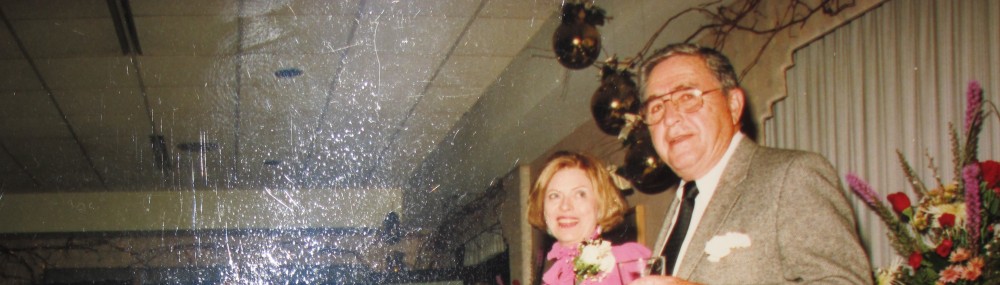
The guest columnists of 1960: Paul Tompkins

Topeka Capital-Journal
September 1960

(While Dick’s Snider is in Europe, with a tour sponsored by the Capital Journal, friends and critics agreed to serve as guests in this space. Today’s writer is Paul Tompkins, with the Sergeant Insurance Company and a neighbor.)

By Paul Tompkins

At last, long-suffering neighbors have a chance to tell their side of the story. What’s it like living next to Snider? You asked for it, Richard, old boy. Here’s my rebuttal.

From the first day we moved into the new house and Snider waited until all the heavy stuff was off the truck before showing up, from the day he Tom Sawyerd us into helping build and paint the yard fence, from the time it was 110 in the shade and he left Max Kiene and me with 14 tons of wet cement to finish his patio, I knew this slick talking Okie would bear more than a little watching.

Snider is probably the cleverest guy in the area. This was proven to me the time he talked that shrubbery salesman into letting him have more non-blooming, high-priced bushes than anyone else on the block.

As he and I sat in the shade the other day watching my wife dig crabgrass out of our front lawn, he assured me the frost would take care of all weeds next fall and do it a lot easier. I think he is probably right because the July sun took the snow off his driveway, just like he said it would last March.

He’s an optimist, too, this Snider.

When he planned his trip to Europe, he asked me to mow his lawn, trim the shrubs., weed the flower beds, and look after the place in general. Now, he knows I won’t do that. And he went to look at my place and see that I don’t even do that at home.

Our neighborhood is different than most any other, I suppose. We don’t necessarily do our yard work when it needs it. We do it when the tools are available. When there is only one spading fork among all of us, you spade the flower bed when no one else wants to use it.

My neighbor, Max Kiene, is probably the luckiest fellow in our part of town. When the Snider family pet Manfred the Wonder Dog gets out the pen, he comes over to see my two dogs, and when my dogs get out, they go over to visit Manfred. Kiene lives right between us, so he gets the benefit of having dogs, but he doesn’t have to own one.  There aren’t many people who would be willing to share their pets like Snider and me.

If you’ve ever read this column before, you know that Snider is a keen student of city politics. He has made some pretty broad statements about our city fathers. At one time you will recall, he referred to one of them as a “cheap politician.” Now this isn’t true. There’s nothing cheap about them. They’ve cost this town plenty of money.

I was sort of sort of sorry to see Snider move up from the sports desk. There doesn’t seem to be near as many free football tickets now as there was in the old job. I suppose managing editors don’t have as much influence as sportswriters

Sometimes, I don’t believe he appreciates the little things people do for him. Take last year, for example.

When Northwestern ran Oklahoma clear off the field and gave them the worst beating in years, we all sent him a sympathy card and put a black crepe ribbon on his door. To this day, he hasn’t sent any one of us a thank you note.

Along this line, Snider, I hope you’ll take good care of the suit and have it back to me by the middle of August. The wife and I plan to take a little trip to Kansas City and it is the only suit I have with two pair of pants.

We’ve watched with a great deal of interest the growth and development of the Snider family.

We all waited breathlessly for the arrival of the little Amy. We’ve watched both Stephen, Kurt climb on the school bus and go off to their first day of school. We all struggled through the housebreaking of Amy and Manfred.

With apologies to the jovial dentist of Medford Avenue, I pulled Steve’s first tooth, while his dad, the Joe Garagiola of Cornwall Street was off with Dev Nelson giving the color and background as K-State pushed its way forward from its own four-yard line, third down and 25 to go. (Note: Carnes and I have signed a nonaggression pact now. I promise not to pull any more teeth, and he won’t sell any insurance.)

Snider speaks two languages, English and profane. I sometimes wonder just how he manages to stay on the air after hearing his expressions when one of the boys breaks off one of his $18.95 night blooming cranberry bushes.

Uncle Sam could do a lot worse than the leave Snider over in Europe as a roving goodwill ambassador. With his ability to return your rake with the handle broken out, to explain that he can’t find the claw hammer he loaned him a couple of weeks ago and his knack for setting settling disputes among the four kids and there are only three popsicles to divide, I think he could convince Nikita that we’re on his side after all, and that nobody ain’t mad at nobody.

There it is, Dick, old boy. Now you have your choice, to stay in Paris, sipping a tall cool one at the sidewalk cafe and watch the mademoiselles go by or return to Cornwall Street, where ivy is growing every place except where it should, and face the wrath of an irate publisher for turning your column over to an amateur journalist who had an axe to grind.

PS: In case you do decide to stay, OUI means yes in French.

The guest columnists of 1960: Charles Howes

Topeka Capital-Journal
September 1960

(Charles Howes, who does some airplane driving and frequently has Dick Snider aboard, is today’s guest writer, discussing eccentricities of his peculiar passenger.)

By Charles Howes

I’ve wondered since Snider’s departure if he endeavored to have the pilot of his overseas jet route the flight from New York to Copenhagen via Oklahoma.

It isn’t a fantastic idea, in as much as I have precedent on which to draw. Every trip that we have made together was planned by Snider, and it was routed across that state to the south.

Of course, no one should be castigated for favoring his birthplace, but the extremes to which he goes have caused his fellow travelers to adopt countermeasures. Continue reading

Recalling the Topeka Flood of 1951

Topeka Capital Journal
July 22, 1996

It must have been Hurricane Bertha that reminded Lou Falley of the great Topeka Flood. It happened 45 years ago, and Falley, business tycoon, philanthropist and historian, remembers it in grim detail.

He was telling me about it on the phone, and asking me if I knew certain streets and buildings in North Topeka that he was talking about. When I said no, he said he’d drive me over there and show me where the flood took its awful toll.

We met in the parking lot of the Falley’s Market on Gage Boulevard, and I got in his car. It’s a two-year-old Chevrolet, and a small one at that, far from the top of the line. It proves he doesn’t feel that he needs to try to impress the populace with a fancy set of wheels.

/more Lou is 91 now, but he drives like he wants to get where he’s going, and he expresses some impatience with slower drivers. We headed north and crossed the river that got out of hand in 1951, and then we turned east on Lower Silver Lake Road.

Before long, we crossed the railroad tracks where his parents and youngest brother were killed in 1917. The new family truck, a Smith Former with chain drive and hard rubber tires, stalled on the tracks and was hit by a fast-moving passenger train. It happened within sight of the Falley home on the South side of Lower Silver Lake Road.

Lou recalls that on the afternoon of July 12, 1951, he was visiting his brother, Sam, who was living on the old Falley home place. It had been raining hard for days, and they recalled a warning their dad had given.

He had said if water ever ran from the West across the north side of the house, it was time to get out of all of North Topeka, because the house sat on ground about 25 feet higher than downtown North Topeka. As they talked, they watched water running that very course, So Lou went into action.

He was a member of the North Topeka Draining District, and he got the chairman of that group, Kelley Lewis, to phone Topeka Mayor Ken Wilke and ask him to order the evacuation of North Topeka. Wilke said he’d check out the situation, and at 2 p.m. he had all the city’s radio stations advise North Topekans to move out.

At about 10:30 p.m. the flood hit and almost immediately North Topeka was underwater. Travel was by boat only, and it was treacherous.

The main “dock” for launching boats was the North End of the Topeka Boulevard bridge. Lou checked in there on Friday morning, and was put to work. Bill Cardon of the Highway Patrol and Warren “Waddy” Shaw of the National Guard asked him to direct the work of four rescue boats they had commandeered.

They rescued more than 200 people the first day. These were diehards who had refused to evacuate, and most were in upstairs rooms, yelling for help. Four men were pulled from the top of a boxcar near the Garvey grain elevators.

Many people wanted to get from the bridge to dry land on Rochester Road, and on the third day a big barge, powered by two 150-horsepower outboard motors, and manned by two Navy men, was ready for this shuttle service.

Lou, however, said he doubted they could make the dangerous turn at the corner of Paramore and Tyler because of the swift current. The Navy said it could handle any situation, so Lou and another man in one of the small boats led the barge, with 17 aboard, on the trip.

Sure enough, at “Amen” corner, the barge slammed into a light pole and overturned. The 17 grabbed trees and low hanging phone lines. All yelled for help and, and some panicked and screamed.

Lou and his partner could rescue two at a time and take them to the roof of a nearby house. Lou told the men in the water to hang on, and they’d all be saved. And, he challenged them.

“There are mice, and there are men,” he said, “So I guess we’ll rescue the mice first.”

At that point, he said, they all quit pleading for help. Nobody wanted to be among the “mice.” Eventually, all 17 were hauled to safety on the roof of the house and later picked up by other boats.

As the flood water receded, residents wanted to return, and Lou was put in charge of determining which neighborhoods were ready for them. He recalls keeping some families away from their homes until dead cows and hogs could be removed from the porches, and even the roofs.

At the infamous corner where disaster almost struck, Lou and I stopped a woman wanting to ask her if she had lived there in 1951. We introduced ourselves and she was totally unimpressed. Maybe Lou should trade that Chevy for a 32-valve Belchfire Bazoomer.

He probably could get a loan, because I think he still owns a bank.

Best Steak in the World

Topeka Capital-Journal
May 22, 1991

The North Star Supper Club is a good place to eat, particularly if you’re hungry and like steak and french fries smothered in chicken gravy. It isn’t very sophisticated, but the place has been there so long, and created so many temporary gluttons, it is more than just an institution. It is almost a shrine to meat-and-potatoes people seeking the ultimate fat fix.

It might qualify Topeka as the cholesterol capital of the free world, but for the faithful who keep returning it is the only place to go if you want a meal fit for four linebackers and their Dobermans.

Dinner there is a can’t-miss deal, because the steaks are large and uniformly good
And the fries and gravy are served on the plan the Okies call “pitch till you win.” In
other words, you get all you can eat, and the gravy served with the assurance from the waiter that it is low calorie stuff. Continue reading

A Capital Farewell

(Editor’s Note: In 1961, Dick Snider was appointed administrator of the President’s Council on Physical Fitness by President Kennedy. This column as the Daily Capital’s managing editor was followed three days later by his final one in that job.)

Topeka Daily Capital
April 23, 1961

Three times in a brief career in newspapering I have started a column something like this: “If you’ll turn down the lights and put on some soft violin music, I’ll sing my swan song.” It will have to do again this time.

This one is strictly personal, in that I’m leaving and this column isn’t. It will continue to appear from time to time. I will be in some new places and will be seeing some new faces, So maybe there will be something new here. It’s about time, too.

A friend of mine named Amy may sneak in here occasionally, as she has in the past. She knows we’re moving, and she is concerned about the status of Manfred the Wonder Dog. We are all concerned about him.

The rest of the family is afraid they can’t take him to Washington when they join me there. I’m afraid they’ll learn they can. And if they can, they will.

And I’m afraid there isn’t room for both of us at the public through. . . .

Seriously, I’d miss Manfred. He’s everything a dog should be except well-bred. I thought about him when I had to fill out government security forms, outlining my ancestry. Manfred’s family tree would look like a geometric mistake.

I’m going to miss a lot of things around here. A lot of people, too. . . .

I’ll never pass the Pentagon without thinking of Lindsey Austin. They’re built almost exactly alike. . . . I’ll miss the neighbors, particularly Tompkins and Kiene and our annual major project designed to make our Bermuda grass grow. I won’t miss the Bermuda grass. . . .

I’ll miss the golf, and the conversation that goes with it, but I won’t miss it half as much as the men I’ve played with will miss me. There’ll be a long time finding somebody as easy as I have been for so long. And I won’t miss the 19th hole. Fitness is the thing with me now, men. . . .

I suppose I should be honest and say I will miss those gatherings after the golf game. Where else can you hear a minimum of 17 men yelling about 17 different subjects, all at the same time? In that mess there is invariably only one gentleman, and I’ll really miss him. His name is Earful Grant. A good man.  . . .

I’ll miss my work with Dev Nelson, the Graham McNamee of Marquette, Kan. Dev and I must have done a few hundred basketball games together and I never could get him to admit a single one of them was a bad one. I can’t remember many good ones. . . . I’ll miss my co-workers, even though they’ve told me they’re fund to buy me a new portable typewriter fell a little short. They’re buying me, instead, a new ribbon for my old portable. . . .

I’ll miss my work with Tom King and the “Best of Europe.” I’m leaving with a group May 2 on the tour that was planned last fall. And next year it would have been the “Best of Cuba” with all expenses, including burial, paid. …

I’ll miss the people downtown, from Vic Whittaker’s to Max Prichard’s, which is a long walk. . . . I’ll miss lunch at the coffee shop and the patient lady named Marene who always refrained from pouring a bowl of soup over anybody’s head.

I’ll miss a lot more people and places I haven’t mentioned, some because they’re unmentionable, but I’m looking forward to this new endeavor. I’ll be working for a man I have admired, greatly, for a long time. I’ll be working with men who are convinced, as I am, that we have a chance – maybe the only chance any of us will ever have – to do something really significant.

I hope we get it done. I hope we get it done in a hurry, too, so I can come back and ask, “What’s new, besides some holes in E 29th Street?”

 
April 26, 1961

Saralena Sherman called and said the office people wanted to have a farewell party for me. I got there late, so the room was full when I arrived. I glanced around quickly, saying hello, and I noticed a gray-haired gentleman sitting in a corner and wondered who he was.

I started for the kitchen and Saralena asked me if I knew everybody there. In a situation like this, I am inclined to say, sure I do, but this time I turned and took another look at the man in the corner. I almost fainted.

It was Hizzoner, Mayor Ed Camp.

The shock must have registered on my face, because everybody started laughing as the mayor and I shook hands. He was laughing, too, so I figured this wasn’t going to be my night. It wasn’t.

When things settled down, they staged the presentation. Gary Settle trained lights and camera on us as we stood in the center of the room. The mayor spoke, and he didn’t leave anything out. He cut me up in tiny pieces while everybody howled.

He really did a great job. He commented on my contributions to city government. He thanked me for my part in keeping American dollars at home through the “Best of Europe” tours. He congratulated me for my temperance in all matters, including my always-unruffled calm on the golf course.

He dug up every old sore point from columns of the last two years and concluded by observing that, “While some people hate to see you leave, frankly, I don’t.” He expressed amazement that a hater of politicians of my stature would accept a political appointment.

He definitely slipped the needle into me in every vulnerable point, and there were many of them. Then he presented the trophy.

It’s a beautiful thing. It’s a man in a perfect golf swing, only he has a bull over his shoulder. The idea of throwing the bull is perfectly conveyed. Beneath it is an engraved plaque, which starts by saying:

“To Dick Snyder.”

It goes on and concludes with the other spelling mistake that grates most on my nerves. It says the trophy is from, “the Capitol staff.”

In thanking the mayor, I told him he had done a pretty good job on me and that I had it coming. Nobody could argue that point. The mayor didn’t, anyway. Then, much to everybody’s surprise, he presented me a key to the city in a nice case. I suspect he went out next morning and changed the locks, but all he said is that I might need the key to ever get back in.

The mayor and I had met only once previously, at one of those holiday parties where everybody shakes hands. If there was one word of truth spoken the night of the presentation, it came when I commented on this. I told the mayor I was glad I hadn’t become well-acquainted with him before. I told him it would have spoiled a lot of good column material for me. . . .

When the (bleeping) presses rolled every night

Topeka Capital Journal
July 23, 1997

This column is about newspapering, but there won’t be stories about editors screaming, “Stop the presses.” These days the presses are still stopped, but it’s because of a malfunction, a power outage or a plan to get the box score of the Royals latest loss in Seattle, or Oakland, or maybe a 15-inning, five-hour defeat in Chicago, in the paper.

There even was a time when the presses would be stopped, or started late, so that a display advertisement could be added, or maybe, in extreme circumstances, eliminated. Late changes also could mean the presses would start early. It was enough to make editors scream, “Leave the bleeping presses alone!” (More on bleeping later.”)

Snow was the main culprit. If a heavy snow was falling, or was forecast, deadlines might be moved up to give circulation workers more time to get the papers distributed and delivered. Snow also could mean more ads were crammed into the paper, creating havoc as editors lost precious space.

The ads would be for snow tires and shovels, particularly early in the season. In almost every city where snow was a possibility, there were snow ads set and ready to run, waiting for a blizzard or at least enough snow to get stuck in or shovel.

Publishers and editors look at snow from distinctly different viewpoints. Publishers, eyeing revenue, would look at the forecast and the storm clouds and say, “Let’s hope it’s nothing trivial.” They would pray for enough snow to trigger the ads, and often the decision would be made within minutes of press time.

Editors understood the priority of revenue over space, but they could be heard to sob occasionally as they tore up pages, getting rid of stories and photos to make room for snow tires. Can you imagine the pain of losing a layout on bikini fashions in the tropics to a Gregg Tire Co. ad?

On rare occasions, however, editors gained space because of what happened in the news. Airline companies had standing orders to newspapers to pull their ads if there was a story in the same issue about an airline accident.

The reasoning is obvious. It wouldn’t do to have a story about a crash that took 89 lives wrapped around a big ad for an airline company boasting of the speed, comfort and safety of flying. There were some big-time disagreements when newspapers failed to pull airline ads on a disaster day.

Editors really never spent a lot of their time worrying about snow and airlines. As they do today, they always worried more about the quality of the product. The Capital-Journal, for example, has an in-house critic and teacher who reads every word of the news in the paper every day, and comments on it, often rather harshly.

I would tell you her name is Stannie Anderson, but I won’t, because some might think I’m trying to gain favor.

The other day, in her weekly critique, she was emphasizing the value of short lead sentences. Seven words, she said, are much more inviting to the reader than 87, which admittedly I lean toward. But, if short sentences and paragraphs are what she wants, expect to see this lead on a future Topeka shooting:

Dead
That’s the way they found Joe Smith Friday.
Shot
In the head, four times.

It is good form in newspapering to give credit where it’s due for something like the above, but I stole it so long ago I can’t recall where it came from. Maybe it was Reader’s Digest, because it is also good form to steal from quality sources.

Newspapers, which must make their product acceptable to a wide audience, can be thankful for the word bleep. It is, without question, the most versatile word in the language. Here are just a few examples of its usage, with Translation following:

“No bleeping way.” (I don’t think your idea is feasible.)
“You’ve got to be bleeping me.” (Would you please repeat that?)
“You’re confusing me with someone who gives a bleep.” (That’s really interesting, but maybe you should call 911, or write to Anne Landers.)
“What the bleep?” (How did I get called for jury duty?)
“You got your head up your bleep.” (I don’t think you’ve listened to what I’ve tried to tell you.)
“This job bleeps.” (Why wasn’t I born rich?)

Finally, my favorite newspaper story. In the old days at the Daily Capital, Arthur “Scoop” Conklin always answered the phone at night. Often it would be people who, having heard a siren, would call and ask, “Where’s the fire?” Scoop, listening to the police radio, would patiently tell them, “10th and Mulvane,” “4th and Kansas,” or whatever.

Then one night, the fire was in our press room, and Scoop had a ball. The callers would ask, “Where’s the fire?” and Scoop would shout, “Downstairs!” Then he’d hang up.

Bush leaguers, parting shots, fresh starts

Topeka Metro News
May 3, 2002

I suppose I should begin by commenting on events leading up to my untimely death on the city’s unofficial newspaper, So here is my report: I was being measured for a muzzle and a leash, so I quit. Period. End of report.

Actually, what happened merely interrupted what already has been a long journey. Old columnists are like old ballplayers, always thinking they have a good year or two left in them, and always wanting to prove it. They can’t wait to go to the mound one more time to show ‘em the curveball still works.

That’s the way it is with me. I’m not out to match the record of Zula Bennington Green, who, as Peggy of the Flint Hills, wrote columns well into her 90s. But I still feel the urge, so when the Topeka Metro News expressed an interest in running a combination of my old and new columns, I said, “give me the ball,” or fighting words to that effect. We’ll see what happens.

I feel I don’t go into this new game without credentials. After all, I was voted Topeka’s favorite columnist for 39 straight years, a record matched only by Porubsky’s chili, and by Baby Dolls, as Topeka’s “best place to spend a rainy afternoon.” Or a sunny one.

Continue reading

Winter Morning Diary

Topeka Daily Capital
Feb. 8, 1961

You get out of bed slowly, taking your time, but your wife, looking out the window, tells you it’s bad out and that you may have some trouble getting to work. You look out. Snow is heavy on the ground and more is falling.

Some people, you say, may have trouble, but not you. You are an experienced snow driver, cool as the ice on the streets and steady as the snowfall. You know, too, that your trusty car will not fail you. Continue reading

Journalist Snidre in the Land of Blahs

(Editor’s Note: The March 24, 1992 Land of Blahs Charity Show in Topeka featured a collection of legislators, lobbyists, lawyers and the financially loaded in an evening of satirical musical performances, including “Gee Journalist Snidre,” which was sung to the tune of “Gee Officer Krupke” from the musical West Side Story.)

Dear friendly Mr. Snider, you gotta understand, your awful, ugly columns are getting out of hand. The citizens don’t like us, you’ve made them think we’re drunks. Back off, Dickie, where as pure as monks!

Gee journalist Snider, we’re very upset, we never get the praise that folks like us ought to get. We’re not just some dummies, we’re misunderstood. Deep down inside us there is good!

There is good! There is good! There is good! There is a world of good! Yes, inside of all of us is good!

We lobbyists really are good! So tell it to the man! Continue reading

One Man’s Kansas

Topeka Capital-Journal
Jan. 24, 1986.

Since Kansas Day is upon us again, since the state is 125 years old, and since it was many years ago that we offered our last review of Kansas history, it is time we went over it again and updated it where possible.

Needless to say, the Kansas native sons and daughters of, of whom I am not one, have not endorsed this account of the state’s history. But what do they know?

To begin at the beginning, Continue reading